


Japan’s Pachinko Industry is a Force to Reckon With



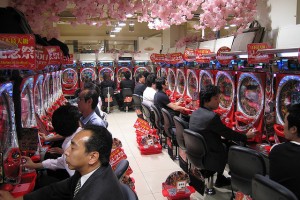 Japan’s Pinball Industry rakes in revenue that is 30% higher than what casinos in Las Vegas earn. What that means is Japan’s citizens spend around $200 billion every year on Pachinko, a popular form of gambling that involves pinball machines.
Now, most forms of gambling are banned in the country. However, Pachinko is one of the few that has managed to survive. As a result, the industry employs more people than any of the country’s top automotive companies and represents 50% of all leisure activities.
There is also an interesting socio-political element to Japan’s Pachinko parlors. Most of them are run by Korean Japanese, who’ve endured decades of discrimination. Pachinko became a source of livelihood for this minority group after entry into traditional workspaces was practically banned. In fact, some parlor owners reportedly still support North Korea and fund the regime with several million dollars.
Even though casinos are now legal in the country, beating Pachinko in terms of revenue is going to be an uphill battle.
All over the map
There are roughly 10,600 Pachinko parlors located across the country, each filled with rows of bright, flashy pinball machines. The objective of the game is for the player to drop as many silver balls as possible into a hole in the middle. This is achieved by leveraging a wheel that shoots the ball into the machine. Then, the ball bounces around pins, which are reconfigured regularly to ensure that the ball has fewer chances of going down the hole.
Now, Pachinko isn’t completely legal. It does operate within a gray area. The only forms of gambling that are completely legal here are auto racing and horse racing. So, parlors give out winnings by exploiting a loophole in the system. There is a “middleman” who helps convert the game winnings into cash.
As far as the game goes, each ball carries a number of points, and those points are redeemed in the form of prizes. However, not everybody wants prizes. So, the prizes are exchanged for cash via this middleman. Once upon a time, this middleman was none other than the Yakuza, Japan’s secretive criminal organization similar to the Italian Mafia.
However, things are different now. Today, the cashier can be found inside the Pachinko parlor, right next to the prize counter. So, all one has to do is take his/her winnings to the cashier and exchange it for cash.
Today, Dynam is the largest Pachinko operator with over 400 branches across Japan. The brand has gained favor among people by offering a cleaner and more professional atmosphere.