


Macau Casino Revenue Drops 8.4% to US$2.51 Billion in July



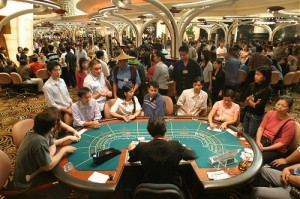 Macau casino revenue declined 8.4 percent year-on-year in July, falling to US$2.51 billion, notwithstanding month-over-month gains that signal ongoing recovery efforts in the region’s gaming sector. Specifically, Macau casino revenues July totalled MOP20.26 billion, representing a 9.4 percent increase from June’s MOP18.52 billion. The year-to-date aggregate reached MOP147.16 billion, marking a 4.4 percent improvement compared to the same period last year. External factors, in particular two typhoons, Maysak and Noul, marginally impacted operations during the month.
Gross gaming revenue from Macau casinos reached MOP 22.13 billion in July 2024, the highest monthly total recorded during the year. This figure represented a 19 percent increase compared to the same month in 2023. The accumulated gross gaming revenue climbed to MOP 140.9 billion for the first seven months of 2024, marking a 6.5 percent rise over the corresponding period in 2023.
The July performance pushed Macau casino revenue to approximately 61.8 percent of the government’s full-year estimate of MOP 228 billion. Note that authorities had trimmed their yearly forecast by 5 percent, down from the MOP 240 billion projected in November, owing to economic uncertainties and shifting consumer trends. Tax revenue expectations faced similar adjustments, revised to MOP 79.8 billion from the original target of MOP 84 billion.
Following the strong July results, the average monthly gross gaming revenue exceeded the MOP 20 billion threshold for the first time in 2024. The Macau government collected just under MOP 51.62 billion in fiscal revenue from gaming taxes during the first seven months of 2024. Revenue levels recovered to 90 percent of their pre-pandemic peak registered in 2019, though the first seven months total remained approximately 19 percent lower than pre-pandemic levels.
What Caused the 8.4% Revenue Decline?
Consumer confidence in mainland China emerged as a primary factor behind the revenue contraction. Analysts identified Chinese discretionary spending as the linchpin for future growth, yet consumer sentiment remained historically low during July, impacting budget-conscious travelers more significantly than premium players. While total retail sales of consumer goods in China reached 3,775.7 billion yuan in July, reflecting only a 2.7 percent year-on-year increase, the modest growth indicated persistent spending caution among mainland consumers.
Economic uncertainties further compounded the challenges facing Macau casino revenues July. Trade tensions between the United States and China created headwinds, with concerns that a weakening renminbi might affect tourism spending patterns. Global economic instability contributed to reduced consumer confidence among travelers and investors alike, dampening the appetite for discretionary gaming activities.
Regional competition intensified pressure on the market. Analysts noted that Thailand, Manila, Japan, and the United Arab Emirates have emerged as alternative gaming destinations. Inasmuch as these markets cater to different traveler profiles, they nonetheless drew attention from mass and premium mass segments. Suppliers of casino equipment began relocating from Macau to more welcoming markets, signaling broader concerns about the territory’s competitive position in the evolving Asian gaming landscape.
How the Gaming Industry is Responding to the Downturn
Six gaming operators committed MOP130 billion in non-gaming investments as part of concession agreements signed in December 2022. The 10-year terms, which began on 1 January 2023, require support for diversification through theme parks, sporting arenas, and cultural facilities. Secretary for economy and finance Tai Kin Ip announced a midterm review of these mandated non-gaming contributions on 28 March.
The government established a target for non-gaming revenue to contribute 60 percent of gross domestic product by 2028, with gaming accounting for the remaining 40 percent. By 2023, gaming’s contribution had decreased to 37.2 percent, while the combined value of four key non-gaming industries rose 6.9 percent over 2019 levels.