



Dutch Licensed Gambling Operators Take Meta to Court Over Surge in Illegal Advertising



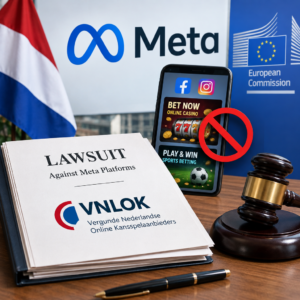 The Dutch trade association for licensed online gambling operators, VNLOK (Vergunde Nederlandse Online Kansspelaanbieders), has filed a lawsuit against Meta Platforms, accusing the company of failing to prevent illegal gambling operators from advertising to Dutch consumers on Facebook and Instagram. The association has simultaneously lodged a formal complaint with the European Commission, escalating a dispute that reflects growing friction between regulated gambling markets and major technology platforms.
The Core of the Dispute
According to research conducted by VNLOK, more than 70,000 gambling-related advertisements appeared across Meta’s platforms during the fourth quarter of 2025. The association estimates that over 95% of these advertisements were placed by operators without a license from the Dutch gambling regulator, the Kansspelautoriteit (KSA).
Of particular concern to the association is the reported removal rate. VNLOK states that Meta removed fewer than 5% of the illegal advertisements, despite the company’s own advertising policies requiring gambling advertisers to obtain prior authorization and comply with applicable local regulations.
The association has characterized Meta’s measures as inadequate, noting that the platforms’ apparent inaction affects vulnerable groups, with younger users increasingly exposed to promotions from unlicensed operators. The Netherlands prohibits the targeting of adults aged 18 to 23 with gambling advertising due to their heightened vulnerability to gambling-related harm.
A Pattern of Limited Engagement
VNLOK has stated that Meta has declined for an extended period to engage in discussions regarding its advertising policy as it applies to the Dutch market. This lack of communication, combined with the volume of illegal advertisements observed, prompted the association to pursue both legal action at the national level and a complaint to the European Commission, where the matter intersects with obligations under the Digital Services Act (DSA), the EU framework governing platform responsibilities for illegal content.
The Dutch action is not an isolated case. Earlier in the year, the United Kingdom Gambling Commission publicly criticized Meta for what it described as insufficient action against illegal online casinos advertising on its platforms. The UK regulator reported thousands of illegal gambling advertisements in a single month, and accounts of its engagement with Meta have drawn attention to the practical burden placed on regulators to identify and report violations themselves.
Broader Context for the Regulated Market
The dispute carries significant implications for the Netherlands’ regulated online gambling sector. Licensed operators argue that widespread illegal advertising undermines the channelization objective of the Dutch regulatory framework – the principle that consumers should be directed toward licensed, supervised operators where consumer protections, responsible gambling measures, and tax obligations apply. When unlicensed operators gain visibility through major advertising channels, the competitive balance between regulated and unregulated providers is distorted.
Independent research analyzing Meta’s advertising archive has added weight to these concerns, with one analysis indicating that illegal gambling advertisements reached an estimated 38 million Dutch user accounts.