



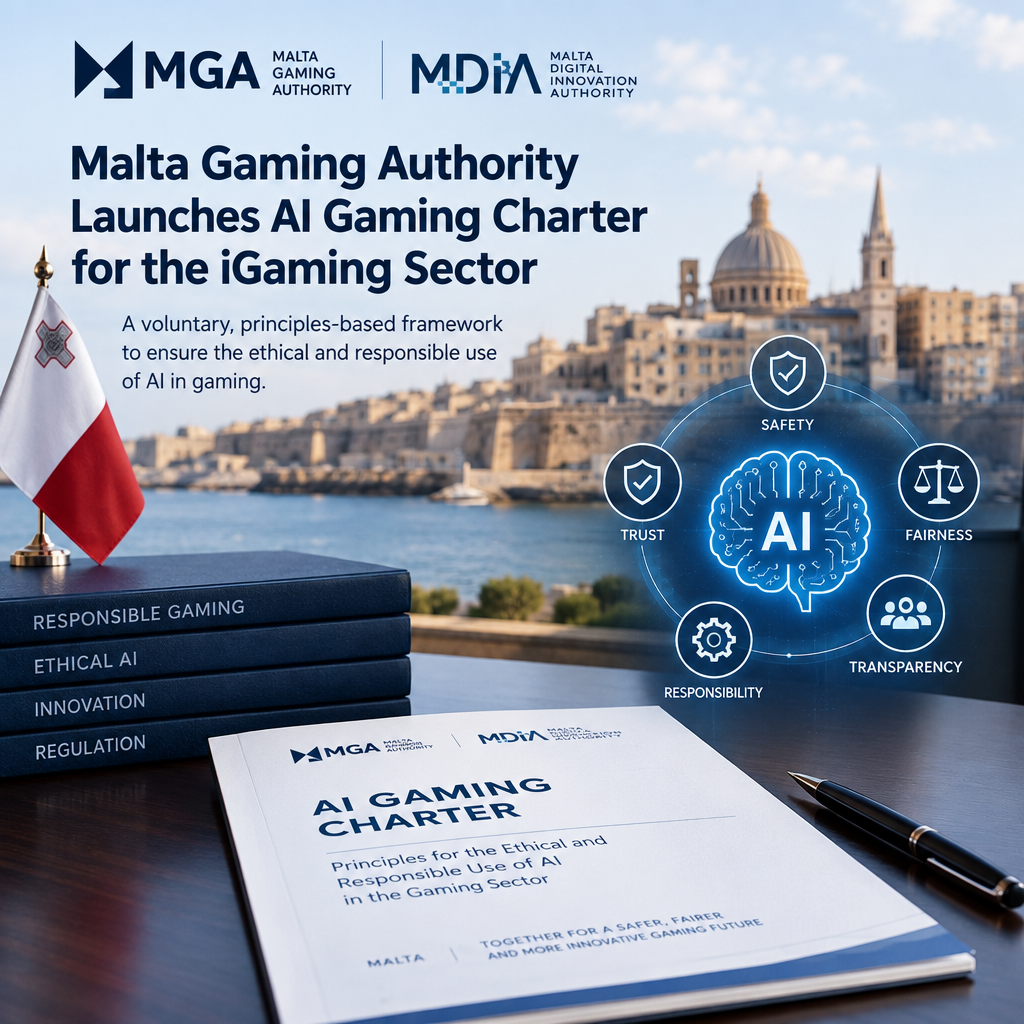
 The Malta Gaming Authority (MGA), in collaboration with the Malta Digital Innovation Authority (MDIA), has launched the AI Gaming Charter, a voluntary, principles-based framework intended to guide the ethical and responsible use of artificial intelligence across the gaming sector. The initiative positions Malta among the first jurisdictions to introduce dedicated AI governance guidance specifically tailored to the gambling industry.
A Voluntary Framework Aligned With EU Regulation
The Charter has been developed to provide practical guidance for licensees deploying AI systems in areas such as player protection, fraud prevention, and customer engagement. Rather than imposing binding obligations, the framework adopts a voluntary, principles-based approach focused on transparency, accountability, and consumer protection.
A central element of the Charter is its alignment with the EU AI Act. By mapping sector-specific guidance onto the horizontal requirements of European AI legislation, the framework offers operators a structured basis for translating broad regulatory obligations into day-to-day operational practice. This alignment is expected to be particularly relevant for Malta-licensed operators serving markets across the European Union.
Development Through Industry Collaboration
The Charter followed an extensive consultation process with industry stakeholders. The MGA opened a targeted consultation on the proposed framework, gathering input from licensees and sector participants before finalising the document. The development process also involved collaboration with legal and technical experts, alongside the joint work between the two Maltese authorities.
The initiative was unveiled publicly in Malta, with the MGA describing the launch as an important milestone in supporting the responsible adoption of artificial intelligence across the gaming sector. The Charter now appears among the Authority’s published guiding documents, alongside its existing policy and thematic review materials.
Context: Growing AI Adoption in Gaming
Artificial intelligence systems have become increasingly integrated into gambling operations in recent years. Operators now routinely apply AI to detect problem gambling indicators, identify fraudulent or suspicious transactions, personalise player experiences, and support compliance monitoring. This growing reliance on automated decision-making has prompted regulators globally to examine how existing frameworks apply to AI-driven tools, particularly where player protection and data processing are concerned.
The MGA’s move reflects a broader trend among gaming regulators to establish clearer expectations around AI governance before enforcement gaps emerge. For Malta, which regulates a substantial share of the European remote gaming market, the Charter also serves a strategic purpose, reinforcing the jurisdiction’s positioning as a hub for regulated innovation.